
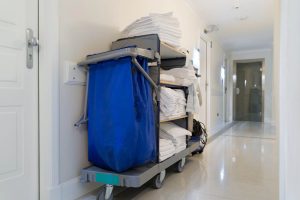
7 Benefits of Professional Remote Housekeeping for Camp Operations
Maintaining a productive workforce in isolated accommodations requires more than comfortable lodging and quality amenities. In the middle of daily

Across Canada’s resource-driven economy, workforce accommodations play a critical role in keeping major projects running smoothly. In sectors such as mining, energy, forestry, and infrastructure, the quality of living environments directly influences workforce performance and project stability.
Remote housekeeping is a key part of that foundation. While often viewed as a support function, it is essential to maintaining hygienic, comfortable, and well-organized living conditions in isolated work environments.
When accommodation standards are consistent, workers recover better, remain on assignment longer, and contribute more effectively to overall project performance.
To understand its role, it is useful to define what remote housekeeping covers in practice. It refers to the structured cleaning and upkeep of workforce living spaces in isolated or high-demand operational settings.
Core responsibilities typically include:
Unlike conventional cleaning services, these activities must operate within coordinated logistics systems where supply access, workforce rotation, and scheduling constraints are ongoing factors.
This is where structured facility cleaning services become essential for maintaining consistent standards across large-scale accommodations.
In demanding industrial environments, workers often spend extended periods performing physically intensive tasks. In this context, the quality of living accommodations becomes a critical factor in recovery, wellbeing, and sustained performance.
When living environments are well maintained, organizations typically see:
At the same time, cleanliness plays a direct role in protecting operational continuity. Shared living spaces in high-density environments can quickly become sources of health and safety risk if not properly managed.
Poor hygiene conditions may contribute to:
This is why structured industrial accommodation services are not simply about appearance or comfort—they are about maintaining safe, consistent, and productive working environments.
When both comfort and hygiene are managed together, they form a foundation that supports stronger workforce stability and more predictable project performance.
Across Canada, working and living conditions vary widely depending on geography, climate, and industry. To understand why structured accommodation support is essential, it helps to look at how these environments translate into real operational demands in practice.
These examples illustrate how different regions and sectors create unique challenges that directly influence living conditions.
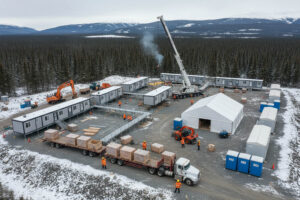
In northern mining regions, projects are typically fly-in/fly-out and operate far from permanent infrastructure. Temperatures can drop below -30°C, and access to supplies is limited.
In practice, high occupancy levels and environmental exposure place continuous pressure on shared living spaces. Maintaining hygiene and order requires consistent facility cleaning services supported by strong logistical planning.
Large energy projects in the oil sands region operate continuous production cycles with rotating workforce shifts. Accommodation facilities often house large populations in close quarters.
This creates ongoing pressure on shared spaces such as dining areas, washrooms, and sleeping quarters. As a result, structured workforce accommodation management is critical to maintaining recovery conditions between demanding shifts.
These projects often rely on temporary workforce housing in regions with seasonal access constraints. Weather conditions can affect transportation routes and supply delivery schedules.
In practice, this requires strong planning within industrial accommodation services to ensure sanitation standards remain stable even when logistics are disrupted.
Forestry and exploration operations in rugged terrain are exposed to constant environmental elements such as rain, mud, and forest debris.
This means contaminants are regularly introduced into shared spaces. Coordinated site services management helps maintain livable conditions despite continuously changing field environments.
Across all these environments, the pattern is consistent: isolation, climate, and workforce density create ongoing pressure on accommodation systems, making structured support essential.
Within broader site support operations, housekeeping functions as a foundational service that enables all other systems to operate effectively.
It works alongside:
When these systems are aligned, accommodation facilities operate reliably even in geographically complex environments.
This integration distinguishes basic cleaning providers from fully coordinated camp support services partners.
Delivering consistent service in remote environments presents ongoing operational challenges, including:
Even minor disruptions can quickly affect overall accommodation quality if systems are not carefully structured.
This is why reliability depends on planning, coordination, and experienced service delivery frameworks.
When managed effectively, professional accommodation services deliver measurable operational benefits:
In many cases, outsourcing camp accommodation services proves more efficient than managing these responsibilities internally, particularly across large or multi-site operations.
Stable living conditions ultimately translate into stable project execution.
Reliable accommodation support depends on structured systems that can perform consistently across changing environments, workforce sizes, and logistical constraints. In practice, strong providers achieve this through a combination of operational discipline and integrated service design.
These systems typically include:
Together, these practices ensure that accommodation standards remain stable regardless of location or operational pressure, while allowing project teams to stay focused on core production activities.
When evaluating a service provider, these systems should be reflected in their overall capability—not just their service descriptions. Selecting the right partner is therefore a strategic decision, not a routine procurement exercise.
Key factors to consider include:
A capable worksite support partner does more than maintain cleanliness. They contribute directly to operational continuity, workforce wellbeing, and overall project stability by ensuring living environments remain consistent and dependable.
In demanding industrial environments across Canada, accommodation quality is not a secondary consideration—it is part of operational performance. When living spaces are consistently maintained through structured remote housekeeping, organizations see measurable improvements in workforce stability, health outcomes, and overall productivity.
The difference between standard service delivery and a well-integrated accommodation program is often reflected in fewer disruptions, stronger retention, and smoother project execution. For operations leaders, this directly translates into reduced risk and more predictable performance across the full project lifecycle.
If you are currently reviewing your accommodation standards or experiencing challenges with consistency, hygiene, or workforce satisfaction, this is typically where a more structured approach to service delivery becomes necessary.
We work with industrial clients across Canada to support workforce accommodation environments through integrated service solutions, including housekeeping, food services, maintenance, and mobilization support.
If you are planning a new project or reassessing an existing setup, we can help you evaluate your current approach and identify practical improvements in efficiency, reliability, and cost control.
Get in touch to discuss your site requirements or call (416) 449-7333 to request a service proposal.
Maintaining a productive workforce in isolated accommodations requires more than comfortable lodging and quality amenities. In the middle of daily
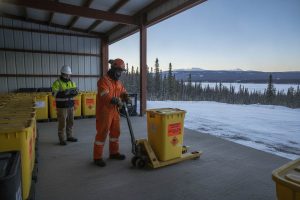
Remote operations in Canada take place in challenging environments where multiple systems must work together smoothly — including accommodation, logistics,
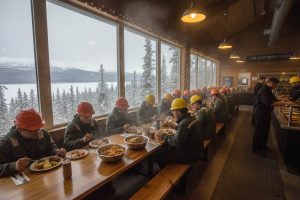
Industrial operations in Canada—whether in oil sands, mining regions, forestry zones, or large-scale construction corridors—depend on one critical but often
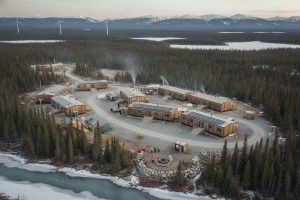
When organizations evaluate large-scale industrial work in places like Northern Alberta, British Columbia, or Newfoundland and Labrador, a remote site

Across Canada’s resource-driven economy, workforce accommodations play a critical role in keeping major projects running smoothly. In sectors such as
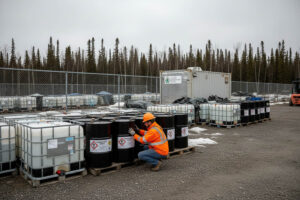
Remote operations in Canada involve multiple integrated systems working together — including accommodation, logistics, safety, and environmental controls. In sectors
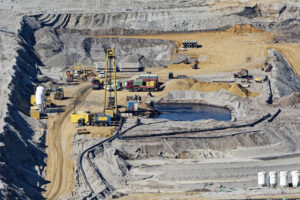
Mining in Canada isn’t just about extracting resources — it’s about sustaining teams through remote camp services in Canadian mining
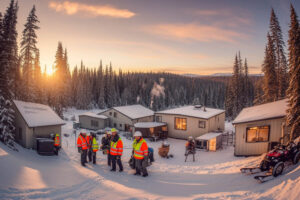
When comparing modular camps vs remote camps, many companies in Canada assume the terms mean the same thing. While the

In places like Fort McMurray’s oil sands or Kitimat’s LNG projects, remote catering companies play a vital role in supporting
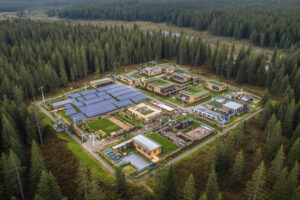
As industrial activity expands into environmentally sensitive regions, sustainable remote camp services Canada are becoming essential to balancing operational efficiency
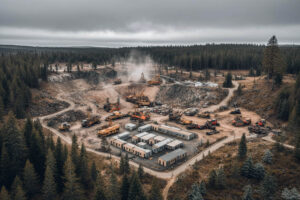
Across vast and isolated regions, remote camp services in Canada play a crucial role in enabling industries to operate efficiently
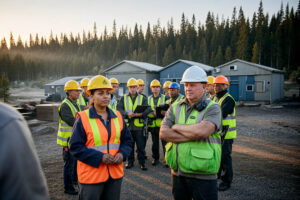
Effective remote site management is crucial for organizations operating in Canada’s isolated work environments, such as oil sands sites in
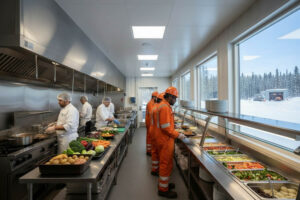
Remote site food catering services play a crucial role in sustaining Canada’s diverse industries, from mining and oil to forestry
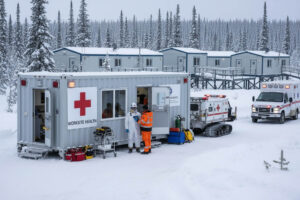
Remote site medical support plays a critical role in safeguarding the health and safety of employees working in Canada’s most
Mobilizing operations in challenging environments requires precision, planning, and expertise. That’s why remote camp mobilization is at the heart of